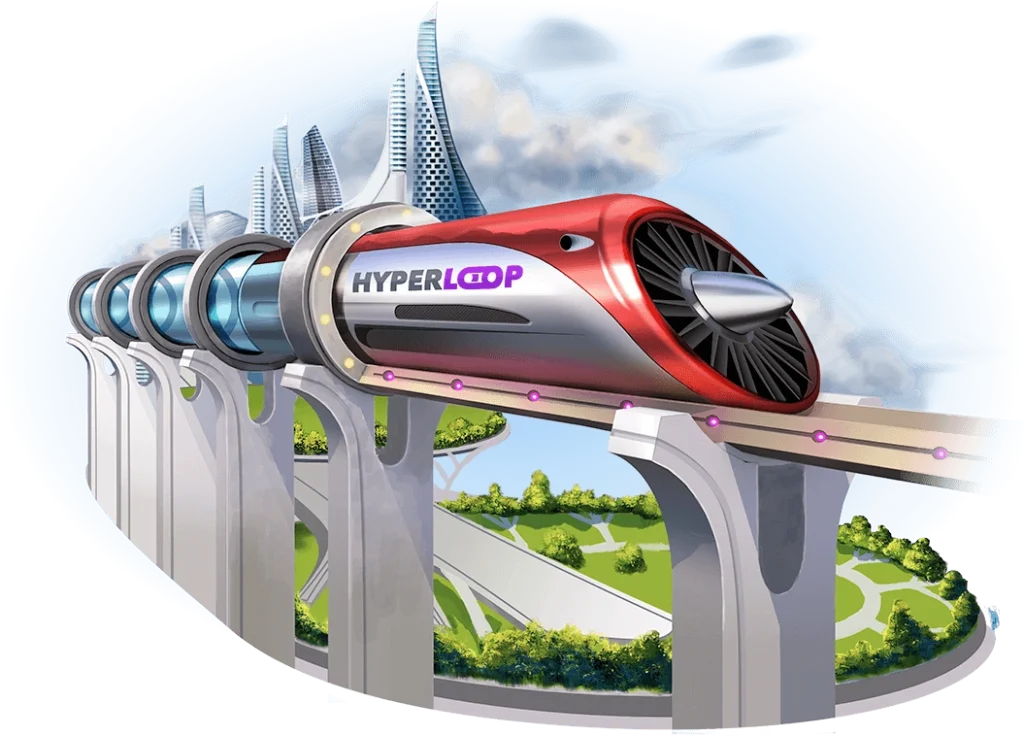
Let’s imagine a world where distance is no longer a significant obstacle, where traveling becomes much easier and faster, similar to taking the subway. It may sound too good to be true, but guess what? We are on the cusp of entering the fastest transportation era in the future, which is none other than Hyperloop transportation.
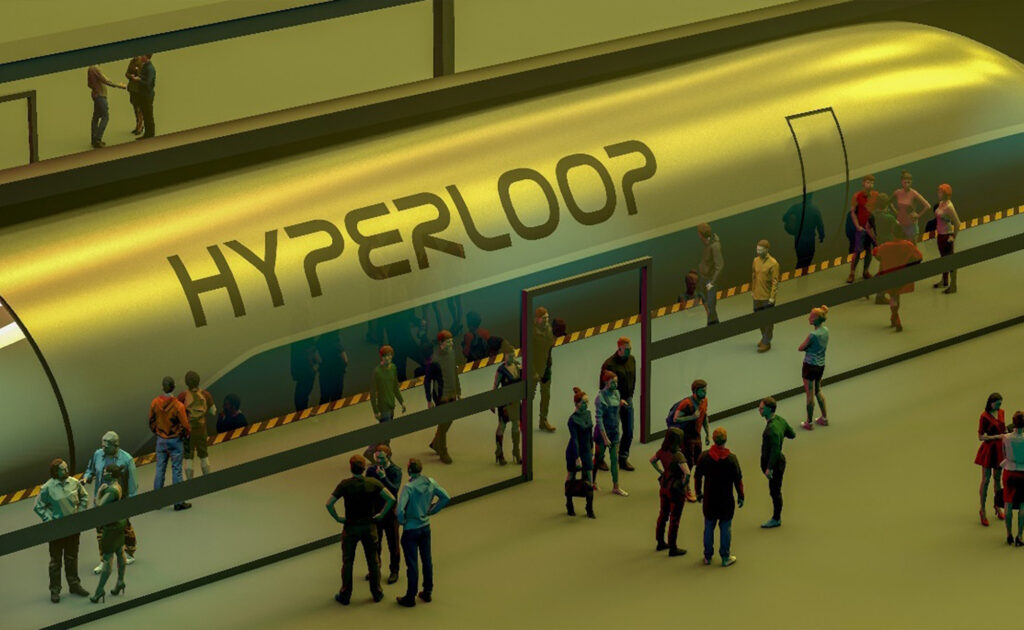
This blog will delve into the fundamentals of Hyperloop technology, including its core concepts, origins, and operational mechanisms. We will also examine the current state of Hyperloop development in India and assess the progress made so far.
HYPERLOOP-INTRODUCTION
The Hyperloop is a conceptual transportation mode that employs vacuum-sealed tubes and magnetic levitation to accelerate vehicles to speeds of up to 700 miles per hour, revolutionizing land travel.
CONCEPT OF HYPERLOOP
The concept of Hyperloop was first introduced by Elon Musk in 2013 and has been under development ever since.
In his white paper, “Hyperloop Alpha,” Musk outlined the fundamental principles of the system, explaining its operational mechanics. Several notable companies and individuals have contributed to the advancement of Hyperloop technology, including:
1. Hyperloop Transportation Technologies (HTT)
2. Virgin Hyperloop One (VHO)
3. The Boring Company (TBC), founded by Elon Musk himself
ORIGIN OF HYPERLOOP
The genesis of Hyperloop can be traced back to 2013, when visionary entrepreneur Elon Musk, CEO of SpaceX and Tesla, Inc., unveiled this revolutionary transportation concept. A brief timeline of Hyperloop’s evolution:
- July 2013: Musk first introduced Hyperloop on Twitter, envisioning a “fifth mode of transportation” that would surpass air travel speeds.
- August 2013: Musk released a comprehensive 57-page white paper, “Hyperloop Alpha,” detailing the concept, technical specifications, and potential routes.
- 2014: Hyperloop Transportation Technologies (HTT) was established, with Musk’s endorsement, to pioneer the development of this technology.
- 2015: Virgin Hyperloop One (VHO) was formed, with Richard Branson’s Virgin Group investing in the venture, further accelerating its progress.
- 2016: The Boring Company (TBC), founded by Musk, began exploring Hyperloop technology for transportation and tunneling applications, unlocking new possibilities.
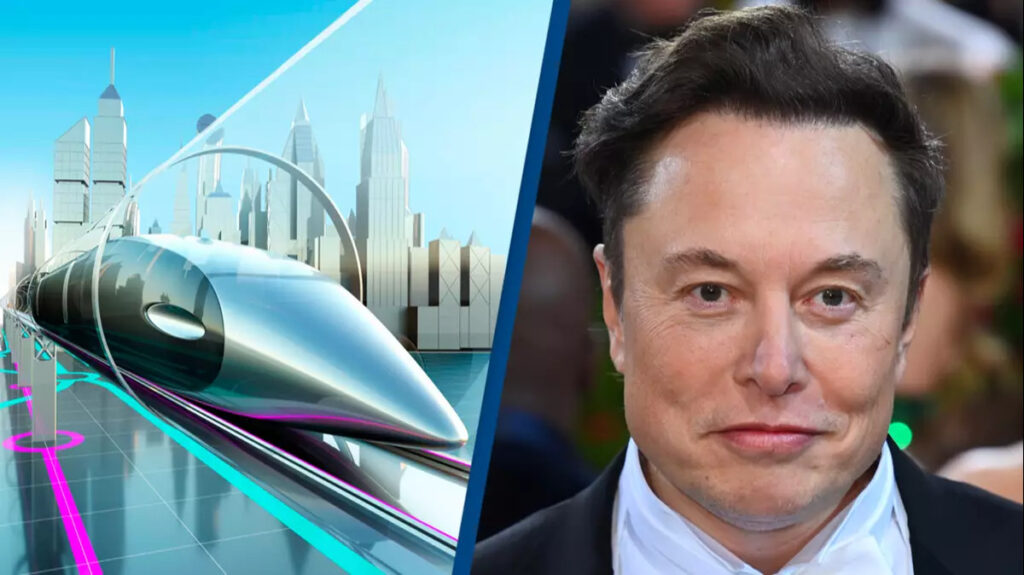
Since then, a diverse array of companies, research institutions, and governments have contributed to the advancement of Hyperloop technology, with numerous test tracks and commercial routes currently underway worldwide.
OPERATIONAL MECHANISM
The operational mechanism of Hyperloop encompasses the following sequential steps:
- Passengers embark on their journey by boarding a capsule at a designated Hyperloop station.
- A vacuum environment is meticulously created to seal the capsule, ensuring optimal conditions.
- Electric motors propel the capsule through the tube with remarkable acceleration, reaching speeds of up to 700 miles per hour.
- Magnetic levitation technology enables the capsule to float effortlessly, minimizing friction and maximizing efficiency.
- The capsule traverses a vacuum-sealed tube, significantly reducing air resistance and facilitating high velocities.
- Advanced navigation systems expertly guide the capsule through the tube, ensuring precision and accuracy.
- As the capsule approaches the destination selected by passengers, regenerative braking is employed to slow it down.
- Finally, the capsule arrives at the destination station, and passengers disembark, concluding their journey.
SOME POTENTIAL ROUTES AND APPLICATIONS FOR THE HYPERLOOP
- Los Angeles to San Francisco (California, USA)
- New York to Washington, D.C. (USA)
- London to Paris (Europe)
- Dubai to Abu Dhabi (UAE)
HYPERLOOP IN INDIA
India is poised to revolutionize its transportation landscape with the advent of the Hyperloop, connecting Pune and Mumbai in a groundbreaking project led by Virgin Hyperloop One. This futuristic endeavor has been designated a public infrastructure project by the Government of Maharashtra, promising transformative benefits for the region.
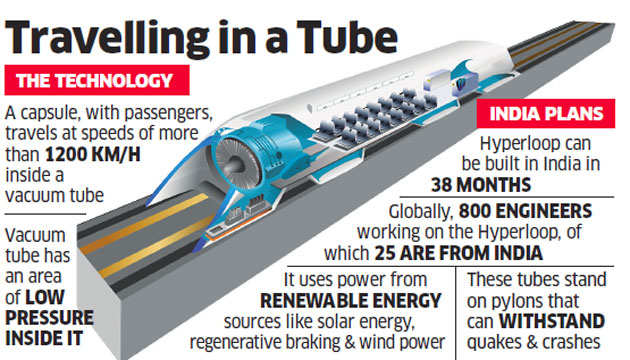
Key highlights of the project include:
- A drastically reduced travel time of under 35 minutes between Pune and Mumbai, compared to the current 3.5 hours.
- Exceptional speeds of up to 1,000 kilometers per hour, setting a new benchmark for transportation efficiency.
- A projected annual passenger capacity of 200 million, catering to the burgeoning demands of the region.
- A significant economic boost, with the creation of hundreds of thousands of high-tech jobs and an estimated $36 billion in socio-economic benefits.
Currently, the project is in the development phase, with safety certification anticipated by 2025 and commercial operations slated to commence by 2030.
CONCLUSION
The Hyperloop presents a multitude of advantages, including significantly reduced travel times, enhanced efficiency, environmental sustainability, and economic expansion. Nevertheless, several challenges need to be overcome, such as technical obstacles, substantial costs, regulatory framework maintenance, and infrastructure development difficulties. As this technology advances, it will be fascinating to witness its impact on the future of transportation.”
I hope that this blog has provided you with a comprehensive understanding of the Hyperloops and has been an engaging read. Wishing you continued enjoyable reading experiences! HAPPY READING!