
“Artificial Intelligence (AI) is the ability of a computer system to mimic human cognition, allowing it to learn and carry out tasks that are usually performed by people. Nevertheless, AI excels in processing large datasets in ways that exceed human limitations.”
“In this blog, we will explore the fundamentals of Artificial Intelligence (AI) specifically designed for beginners, providing a clear understanding of what AI is and its core concepts.”
INTRODUCTION TO AI
- Artificial Intelligence (AI) operates by replicating human intelligence through the strategic combination of algorithms, data, and computational power.
- The term ‘Artificial Intelligence’ was first coined by John McCarthy, Emeritus Professor at Stanford University, in 1955. McCarthy defined AI as ‘the science and engineering of creating intelligent machines,’ setting the foundation for the field’s ongoing development and exploration.
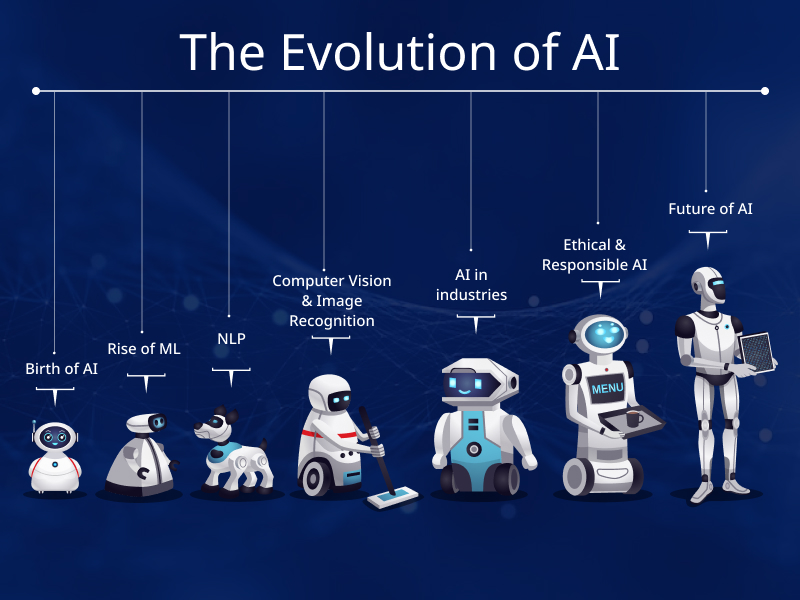
EVOLUTION OF AI
TYPES OF AI
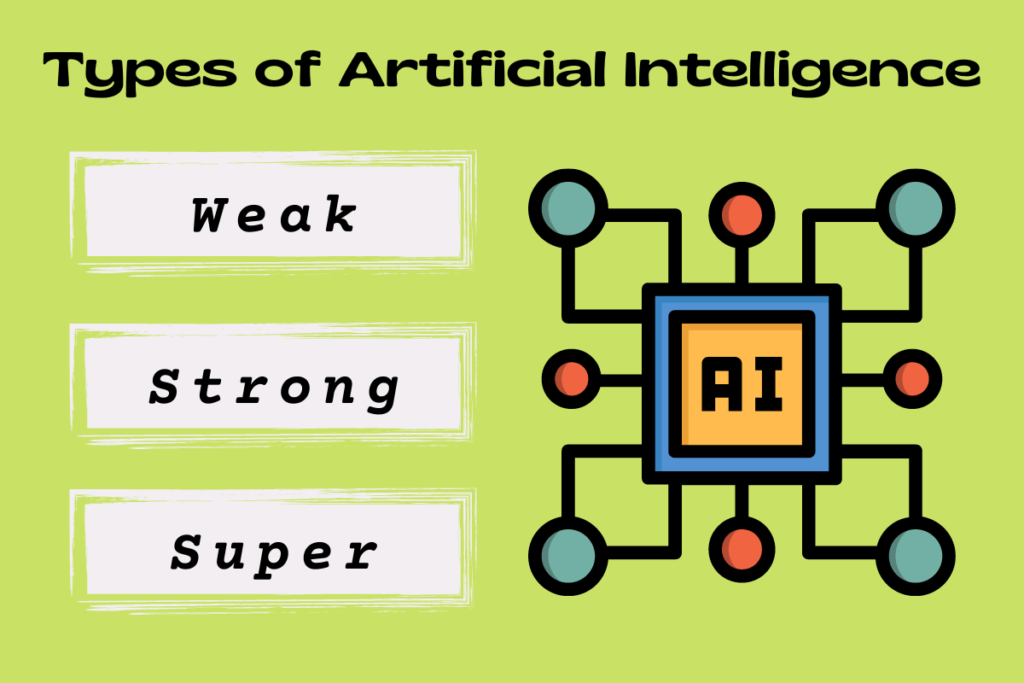
Artificial Intelligence (AI) is categorized into three primary types:
1. Narrow AI (also known as Weak AI): This type of AI is designed to perform a specific task or a limited range of tasks. Examples include applications such as:
– Facial recognition
– Speech recognition
– Image recognition
– Natural language processing
2. General AI (also known as Strong AI): This type of AI is designed to perform any intellectual task that a human can do. Examples include:
– AlphaGo
– Siri
– ChatGPT
3. Super AI: This hypothetical form of AI surpasses human intelligence in all areas. It is not yet possible to achieve and is often depicted in movies, such as:
– Skynet (Terminator)
– Viki (iRobot)
– JARVIS (Iron Man)
AI TECHNIQUES
Here are the common AI techniques,
1. Machine Learning (ML): Enables AI to learn from data and improve its performance over time.
2. Deep Learning (DL): A subset of ML that utilizes neural networks to analyze data.
3. Natural Language Processing (NLP): Allows AI to understand, generate, and process human language.
4. Computer Vision: Enables AI to interpret and understand visual data from images and videos.
5. Robotics: Combines AI with physical machines to perform tasks that typically require human intelligence.
BENEFITS OF AI
1. AI increases efficiency: AI reduces the time taken to perform tasks and enhances multitasking capabilities.
2. AI solves complex problems: AI helps improve our lives by solving complex problems.
3. AI improves healthcare outcomes: AI is widely used in the medical field to improve healthcare outcomes.
4. AI enhances growth: AI enables better education and supports the economic growth of our nation.
5. AI automation: AI can automate routine tasks and optimize processes.
6. AI provides insights: AI provides insights and predictions based on data analysis, leading to better outcomes and results.
7. AI increases productivity: AI offers several benefits, including increased efficiency, accuracy, and productivity.
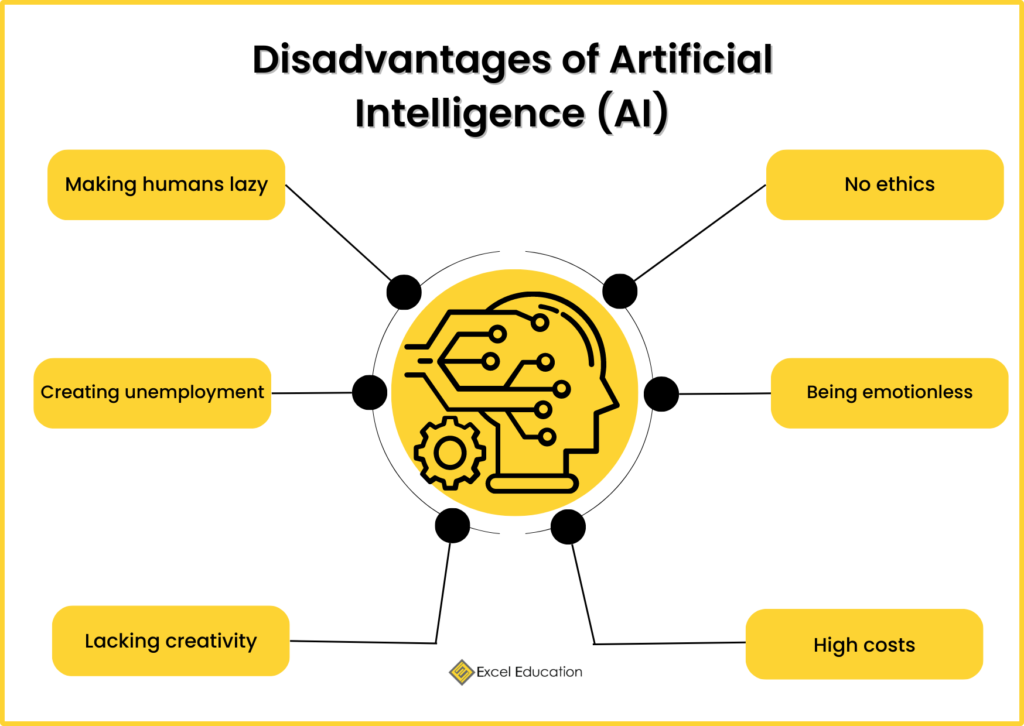
LIMITATIONS OF AI
1. High development costs: Developing AI models is expensive, making it inaccessible to many individuals and organizations.
2. Job displacement and unemployment: AI has replaced humans in various fields, leading to significant unemployment and job displacement issues.
3. Limited creativity: AI technology lacks human-like creativity since it relies on previous data and algorithms, limiting its ability to think outside the box.
4. Data privacy and security concerns: AI’s ability to intercept and process vast amounts of data poses serious risks to data privacy and security.
5. Reduced human interaction: The increasing reliance on AI technology has led to a decline in human interactions, potentially eroding social skills and relationships.
CONCLUSION
Artificial Intelligence (AI) is a powerful technology that can enhance our lives in numerous ways. However, as discussed in the article, it also has some drawbacks. As AI becomes increasingly prevalent, it’s crucial to ensure that it’s utilized in a manner that benefits everyone and doesn’t harm society.
Remember, AI has the potential to either help or harm us – let’s use it wisely.
I hope you enjoyed learning about the overview of AI! I had a great time sharing this information with you. “HAPPY READING!”